
The Role of a General Contractor
A general contractor is the person or company responsible for overseeing a construction project overall, coordinating subcontractors, managing schedules and budgets, securing permits and approvals, and ensuring the finished work meets building codes and quality standards. The general contractor acts as the property owner’s main point of contact and the prime contractor legally responsible for the project’s outcome.
In practice, this means the role sits somewhere between project manager, negotiator, and quality inspector, often within the same single day.
Key Responsibilities of a General Contractor
A general contractor’s duties and responsibilities span the entire lifecycle of a construction project, from initial planning through final walkthrough. These key construction duties don’t change much between a small remodel and a large ground-up build — only the scale does.
Project Management and Planning
Project management is at the core of general contracting. A general contractor develops the project schedule, coordinates trades so work happens in the right sequence, and tracks project progress against the original plan, adjusting as issues come up along the way. Project planning at this stage often involves close coordination with an architect or designer, particularly on projects where the design is still being finalized as construction starts.
Hiring and Managing Subcontractors
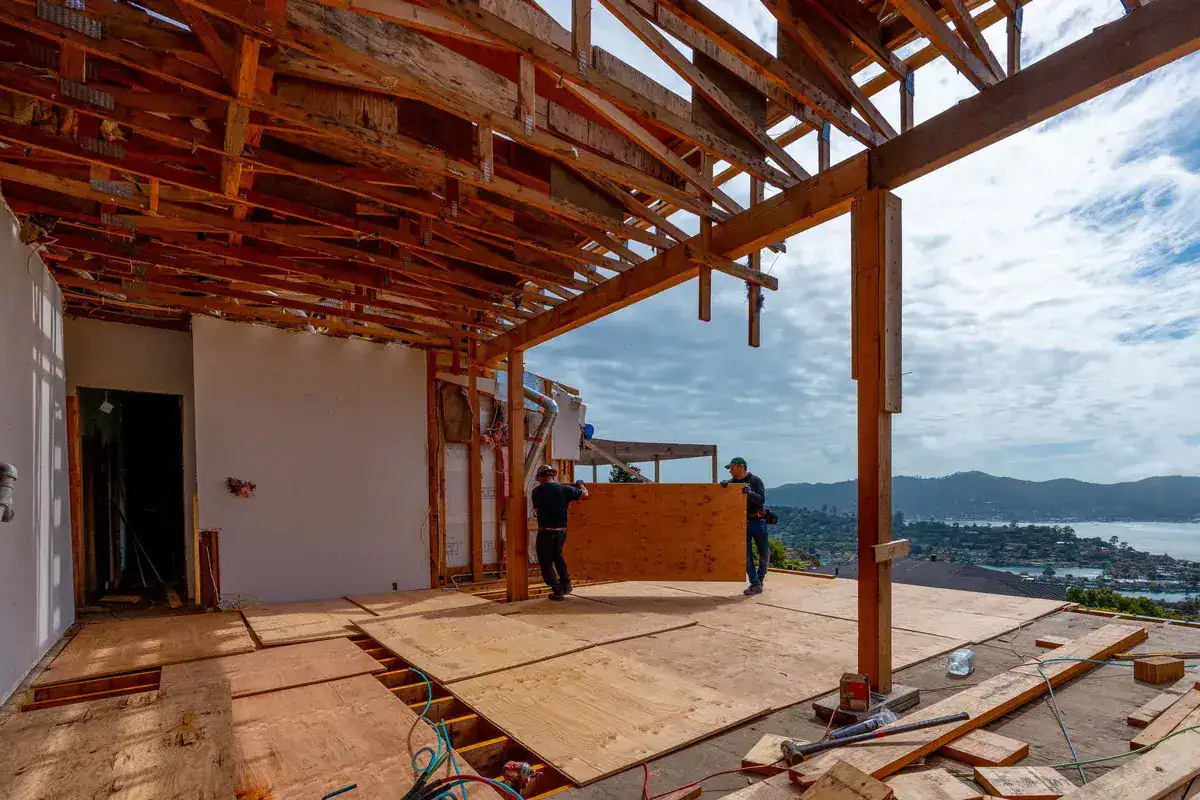
Most general contractors don’t perform every trade themselves. Instead, they hire and manage subcontractors — electricians, plumbers, framers, and other specialists — coordinating their schedules so multiple projects worth of trade work happens in the right order without conflicts.
Permits and Approvals
Securing permits and approvals from the local building department is a core general contractor responsibility. This includes preparing documentation, submitting building permits applications, and ensuring construction proceeds in compliance with building codes throughout the project.
A general contractor typically manages this part of the construction process closely, since missing or delayed permits and approvals can stall an entire construction job regardless of how well the rest of the work is going.
Ensuring Construction Quality and Safety
A general contractor is responsible for construction quality and safety on the job site, conducting regular checks, correcting work that doesn’t meet standards, and enforcing safety practices among all workers present, including subcontractor crews.
General Contractor vs. Construction Manager: What’s the Difference?
A construction manager and a general contractor perform similar coordination work, but the roles differ in contractual structure. A general contractor typically holds the prime contract with the property owner and carries direct responsibility for construction costs and outcomes, while a construction manager often works on a fee basis, advising the owner without necessarily holding the prime contract themselves.
On many projects, a construction manager is brought in specifically for larger or more complex construction projects where the owner wants dedicated oversight separate from the general contractor’s own incentives. A related role, the construction superintendent, typically reports to the general contractor and manages day-to-day construction work and workers directly on site, freeing the general contractor to focus on scheduling, budgets, and client communication across multiple projects at once.
Some construction contractors use these titles interchangeably depending on company size, so it’s worth asking directly how a specific firm defines each role before assuming a shared industry standard applies.
Prime Contractor: What That Term Means
“Prime contractor” refers to the contractor who holds the main contract directly with the property owner, distinguishing them from subcontractors who instead contract with the general contractor rather than the owner directly. On most residential projects, the general contractor and the prime contractor are the same entity.
What Skills Does a General Contractor Need?
Successful general contractors combine technical construction knowledge with strong business and people skills. General contractor skills come down to the same core mix: technical know-how plus the ability to manage people, schedules, and money at the same time.
Technical and Building Knowledge
A general contractor needs working knowledge of building codes, structural basics, and how different trades interact on a construction site, even if they don’t personally perform every task involved in a construction job. Understanding qualifications for each trade helps a general contractor know what to expect from subcontractors on daily tasks.
Communication and Business Skills
Beyond technical skills, a general contractor needs strong communication skills to manage subcontractors, negotiate with suppliers, and keep the property owner informed. Running a construction business also requires bidding accurately, managing cash flow, and using construction project management software to track multiple projects at once. Day-to-day tasks often shift between hands-on problem solving and pure administrative work, sometimes within the same hour.

General Contractor License and Requirements
Most states require a general contractor license before someone can legally bid on and manage construction projects above a certain value. Requirements typically include a combination of experience, passing a trade exam, and proof of insurance requirements being met, including liability coverage for the construction business.
Licensing requirements vary by state, so a general contractor operating across state lines often needs separate licenses for each jurisdiction where they take on work. Some states also require continuing education to maintain an active license, and most track disciplinary history publicly, giving property owners a way to check a contractor’s record before signing a contract.
Independent Contractor vs. Employee: How GCs Work
Many general contractors operate as an independent contractor or business owner rather than an employee of a larger firm, taking on individual projects directly with property owners. Others work as employees of larger construction companies, managing projects on behalf of that company rather than running their own independent contracting business.
A Typical Project: How a General Contractor’s Day Looks
A typical project day for a general contractor might include a morning site walk to check project progress, calls with subcontractors to confirm scheduling, a permit or inspection appointment with the local building department, and time spent on bidding for upcoming work. Multiple projects often overlap, so much of the role involves juggling priorities across more than one construction site at once.
Administrative tasks fill a surprising amount of a general contractor’s week: reviewing invoices, confirming material orders, and occasionally coordinating directly with an architect when design questions come up mid-construction. On smaller residential projects, the general contractor may handle these tasks personally; on larger jobs, some of this work gets delegated to office staff or a project manager.
General Contractor Salary: What to Expect
General contractor salary figures vary significantly depending on the source, location, experience, and whether the person works as an employee or runs their own construction business. National averages reported across salary sites range widely, roughly from the low $70,000s to over $130,000 per year, with federal labor data for the broader construction manager category (which includes many general contractors) landing closer to the middle of that range.
Contractor salary tends to run highest in expensive metro markets and for those who own their own construction business rather than working as an employee, since business owners capture profit beyond a fixed wage. Because salary sources vary this widely, homeowners and career-changers alike should treat any single number as a rough estimate rather than a precise figure.
Residential vs. Commercial Construction Projects
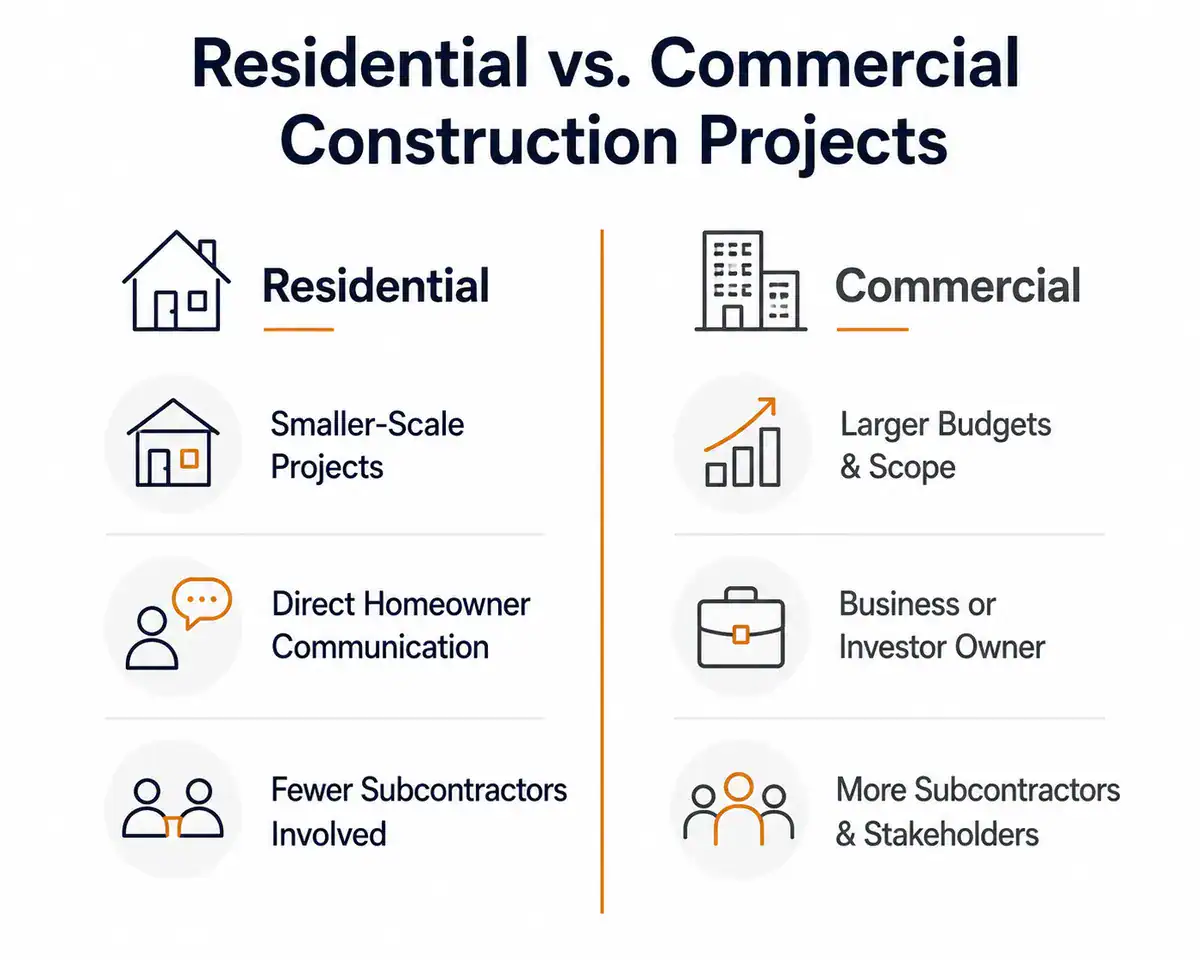
A general contractor’s day-to-day work looks different depending on whether they focus on residential projects or commercial construction. Residential work often means smaller-scale projects and more direct communication with an individual property owner, while commercial construction typically involves larger budgets, more subcontractors, and a project owner that may be a business rather than a homeowner.
Some general contractors specialize in one or the other, while others handle scale projects across both residential and commercial construction depending on client demand. The core responsibilities stay largely the same either way — scheduling, budgeting, permits, and quality — but the pace, paperwork, and stakeholders involved can look quite different between a single-family home remodel and a multi-tenant commercial build.
Tools General Contractors Use
Modern general contractors rely on a mix of physical and digital tools: standard construction tools on site, plus construction project management software for scheduling, budgeting, and communicating with subcontractors and the property owner throughout a project.
Many general contractors also use estimating software during the bidding phase, mobile apps for daily site photos and progress reports, and shared calendars so subcontractors always know exactly when their portion of the work is expected on site.
Key Takeaways
- A general contractor manages a construction project overall: scheduling, subcontractors, permits, budget, and quality control.
- A general contractor typically differs from a construction manager in contractual structure, holding the prime contract directly with the property owner.
- General contractor licensing requirements vary by state but usually include experience, an exam, and insurance requirements.
- Reported general contractor salary figures vary widely by source and business structure, so treat any single number with some caution.
- Both residential projects and commercial construction rely on a general contractor’s core skill set, even though day-to-day work looks different across the two.
Hire the Right General Contractor for Your Project
Understanding what a general contractor actually does — beyond just “building things” — makes it easier to evaluate one for your own construction project. Whether you’re planning a renovation or a ground-up build, look for a general contractor who can clearly explain how they’ll manage subcontractors, permits, and quality from the first meeting through project completion.
The best working relationships tend to start with clear expectations set early: a realistic schedule, an honest budget, and open communication about how decisions get made once the job is underway. A general contractor who welcomes detailed questions during that first conversation is usually signaling the same transparency you can expect once construction actually begins.