How Long Does a Remodel Take From Start to Finish?
Many homeowners assume construction is the longest part of a renovation.
Here’s what’s happening: in the Bay Area, the full project timeline includes several phases before construction even begins.
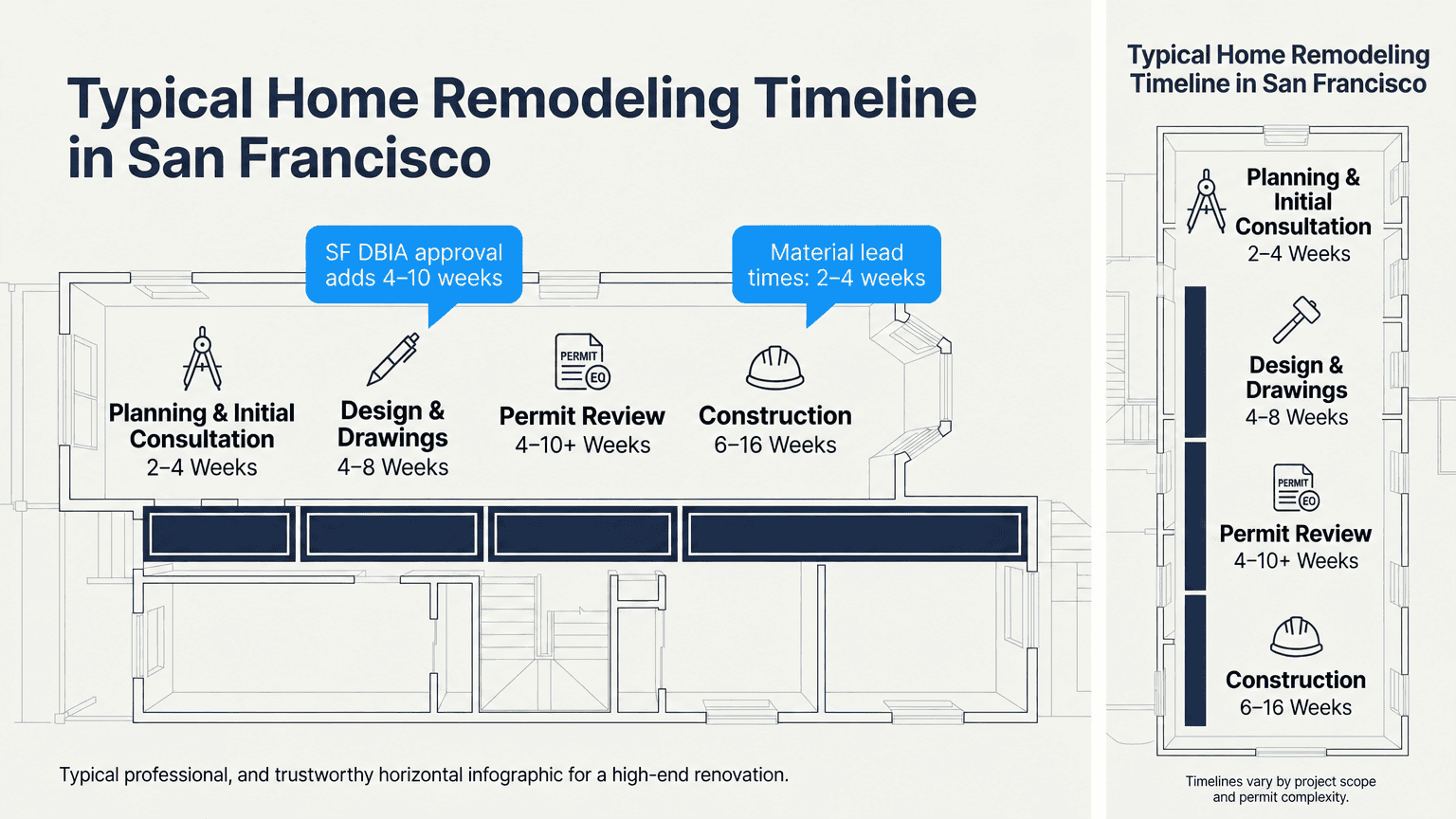
A typical remodeling timeline often looks like this:
| Project Phase | Typical Timeline |
| Planning & initial consultation | 2–4 weeks |
| Design & drawings | 4–8 weeks |
| Permit review | 4–10+ weeks |
| Construction | 6–16 weeks |
For many projects, design and permits take as long as construction.
Understanding this early helps set realistic expectations—and prevents surprises later in the process.
Understanding the Typical Home Renovation Timeline in the Bay Area
A typical home renovation timeline in San Francisco and Marin County ranges between 3 and 9 months, depending on the type of project.
For example:
- Cosmetic updates: 3–6 weeks
- Bathroom renovation: 6–10 weeks
- Kitchen remodel timeline: 8–12 weeks
- Whole house renovation: 4–9 months
The timeline varies depending on the size of the house, structural changes, and permit requirements.
Working with an experienced contractor helps create a realistic timeline from the beginning.
What Affects a Home Renovation Timeline?
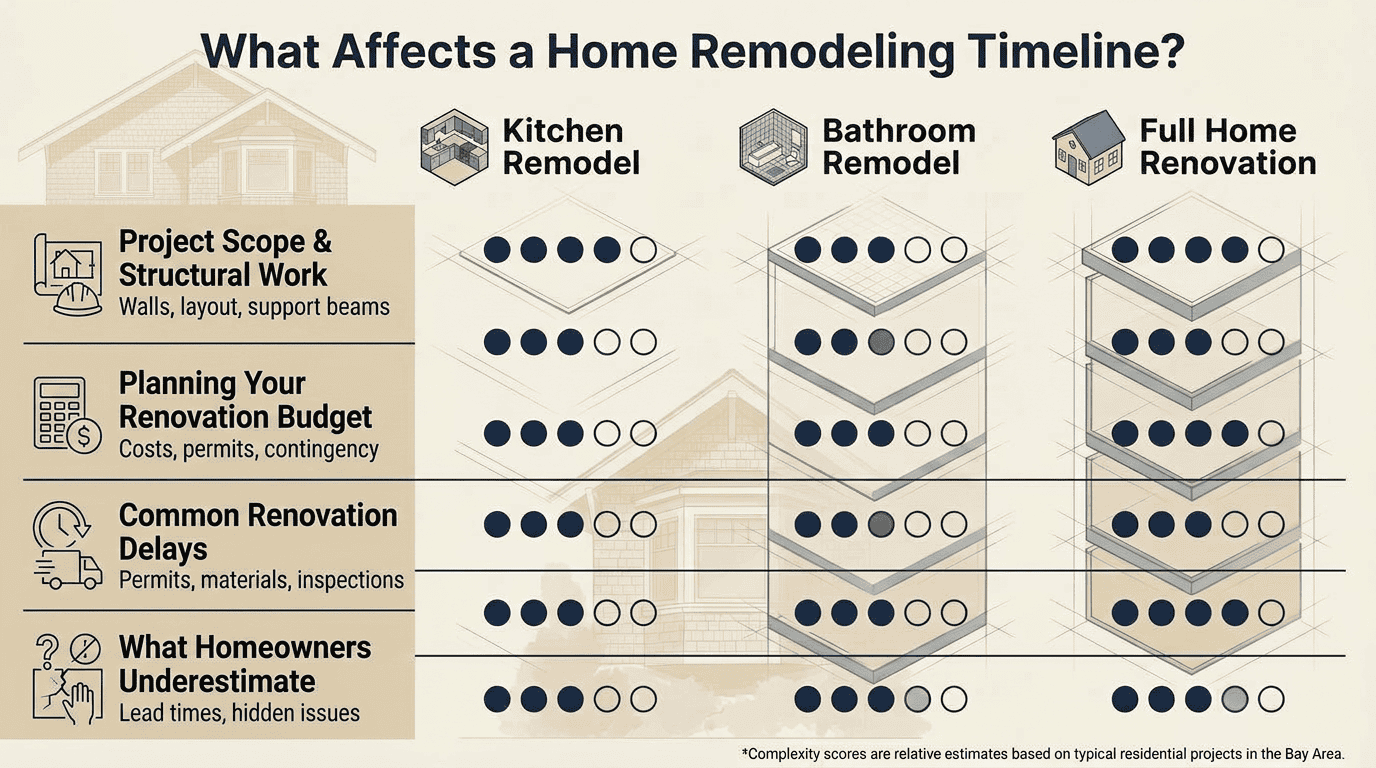
Several factors influence how long a renovation takes.
Project Scope and Structural Work
Projects that involve structural work take longer than cosmetic upgrades.
Examples include:
- Removing walls
- Expanding the house
- Changing the layout
- Adding support beams
Structural work requires engineering review and inspections, which can add time to the construction timeline.
Planning Your Renovation Budget Early
Setting a clear budget early in the process helps keep the renovation timeline predictable.
A realistic budget should include:
- Construction costs
- Materials and fixtures
- Permits and inspections
- A contingency for unexpected repairs
Budget planning during the design phase helps avoid costly changes during construction.
Common Renovation Delays in the Bay Area
Even well-planned projects can experience occasional delays.
Common causes include:
- Permit approvals
- Material shortages
- Inspection scheduling
- Unexpected structural repairs
Experienced contractors plan for potential delays and adjust the timeline accordingly.
What Homeowners Often Underestimate About Remodeling Timelines
Many remodeling timelines extend because of factors homeowners don’t initially anticipate.
Common examples include:
- Waiting for permit approvals
- Ordering cabinets or specialty materials
- Coordinating inspections
- Uncovering hidden issues in older homes
Planning for these factors early helps prevent delays and keeps your project moving forward with fewer surprises.
Step-by-Step Home Renovation Process
Understanding the home renovation process helps homeowners prepare for each phase of the project.
Below is a typical renovation timeline used for projects across the San Francisco Bay Area.
Step 1: Planning the Renovation for Your House
The first step involves planning how the renovation will transform your house.
This stage often takes 4–8 weeks and includes:
- Defining project goals
- Establishing the renovation budget
- Hiring a contractor and design team
- Creating a project timeline
Proper planning helps prevent delays later.
Step 2: Design Phase and Layout Development
During the design phase, homeowners and designers finalize the layout and materials.
Typical design decisions include:
- Cabinet selection
- Flooring choices
- Fixture selections
- Lighting design
- Appliance planning
This stage usually takes 4–6 weeks.
Step 3: Permits and Pre-Construction Planning
Before construction begins, contractors submit plans for approval.
In San Francisco and Marin County, permit approvals can take 3–8 weeks depending on the project.
Why Permits Can Extend a Remodeling Timeline in San Francisco
Permit approval can sometimes take longer than homeowners expect.
Depending on the project scope, plans may go through multiple review rounds with the planning department and building inspectors.
This process can include:
- Plan review cycles
- Corrections requested by the city
- Scheduling required inspections during construction
For more complex remodels, permitting can take longer than the construction phase itself.
Working with a contractor familiar with local regulations helps navigate this process more efficiently.
Step 4: Demolition and Site Preparation
The first visible stage of the renovation is demolition.
During this step contractors remove:
- Old cabinets
- Flooring
- Fixtures
- Interior walls if needed
Demolition typically takes 1–2 weeks depending on the size of the project.
Step 5: Structural Work and Framing
After demolition, contractors begin structural work and framing.
This stage may involve:
- Installing beams
- Rebuilding walls
- Expanding rooms
- Adjusting layouts
Structural work usually takes 2–4 weeks.
Step 6: Plumbing, Electrical, and Mechanical Installation
Once framing is complete, contractors install major systems such as plumbing, electrical wiring, and HVAC components.
Because many Bay Area homes are older, updating plumbing lines is often necessary during renovation.
This stage usually takes 2–3 weeks and requires city inspections.
Step 7: Construction of Interior Finishes
Once inspections are approved, the project moves into the construction stage for interior finishes.
This includes:
- Cabinets and countertops
- Tile installation
- New flooring
- Trim and millwork
Interior finishes typically take 3–6 weeks.
Step 8: Final Construction and Completion
The final stage of construction includes finishing touches such as:
- Painting
- Installing fixtures
- Appliance installation
- Final quality checks
At this stage, homeowners walk through the completed space with their contractor.
When Can Construction Actually Begin?
Construction usually begins after planning, design, and permit approval are completed.
For many Bay Area remodels, the timeline between the first consultation and the start of construction can range from 6–12 weeks, depending on project complexity and permitting requirements.
This is one of the most common questions homeowners ask—and understanding this upfront helps align expectations from the start.
Kitchen Remodel Timeline in the San Francisco Bay Area
A kitchen remodel is one of the most common renovation projects in the Bay Area.
Typical kitchen remodel timelines include:
Planning and design: 4–6 weeks
Permits and preparation: 3–5 weeks
Construction: 6–8 weeks
Because kitchens involve plumbing, cabinetry, appliances, and electrical work, they require careful coordination.
Bathroom Renovation Timeline
A typical bathroom renovation takes 6–10 weeks.
This timeline includes:
- Demolition
- Plumbing updates
- Tile installation
- Fixtures and finishes
Material lead times can affect the schedule slightly.
Whole House Renovation Timeline
A whole house renovation timeline usually ranges from 4 to 9 months.
These larger projects often include:
- Structural modifications
- Layout changes
- New flooring throughout the house
- Kitchen and bathroom upgrades
- Exterior updates
Because the entire house is affected, construction takes longer.
How to Prevent Construction Delays
While delays can happen, several strategies help keep projects moving.
Finalize Design Decisions Early
Changing design choices during construction can extend the timeline.
Hire an Experienced Contractor
Experienced contractors understand local building requirements and help keep the project on schedule.
Plan Material Orders in Advance
Ordering cabinets, appliances, and fixtures early prevents supply delays.
Home Renovation Checklist for Homeowners
Creating a home renovation checklist helps homeowners stay organized.
Typical checklist items include:
- Define project scope
- Set a renovation budget
- Hire a contractor and design team
- Finalize design selections
- Apply for permits
- Prepare the house for demolition
- Begin construction
A checklist keeps every stage of the project on track.
Realistic Construction Timeline for Bay Area Homes
Homes in San Francisco and Marin County often require special considerations due to:
- Older construction methods
- Historic architectural styles
- Strict permitting requirements
Because of these factors, setting a realistic construction timeline is essential.
Working with experienced builders familiar with local regulations helps ensure a smoother renovation process.
Final Thoughts on the Home Renovation Timeline
Understanding the home renovation timeline helps homeowners plan their renovation with confidence.
While every project is unique, knowing the typical timeline—from planning and permits to construction and finishes—makes the process easier to manage.Whether you’re planning a kitchen remodel, bathroom renovation, or full house transformation, working with the right contractor helps ensure the project stays on track.