Which is right for your bathroom?
Walk-in showers have become the more popular choice for a primary bathroom. They offer easier access, a more open bathroom layout, and lower long-term water use. A bathtub, or a tub shower combo, still makes sense for households with young children, a preference for baths, or a secondary bathroom where resale expectations favor keeping at least one tub in the home. The right choice depends on your specific needs and preferences.
Key differences between a walk-in shower and a bathtub
The key differences between these two options come down to accessibility, water use, and how each affects a bathroom’s overall feel.
A walk-in shower typically offers a more open, modern look and easier entry, while a bathtub provides the option of a full soak and remains the traditional bathroom fixture buyers often still expect to find somewhere in a home.
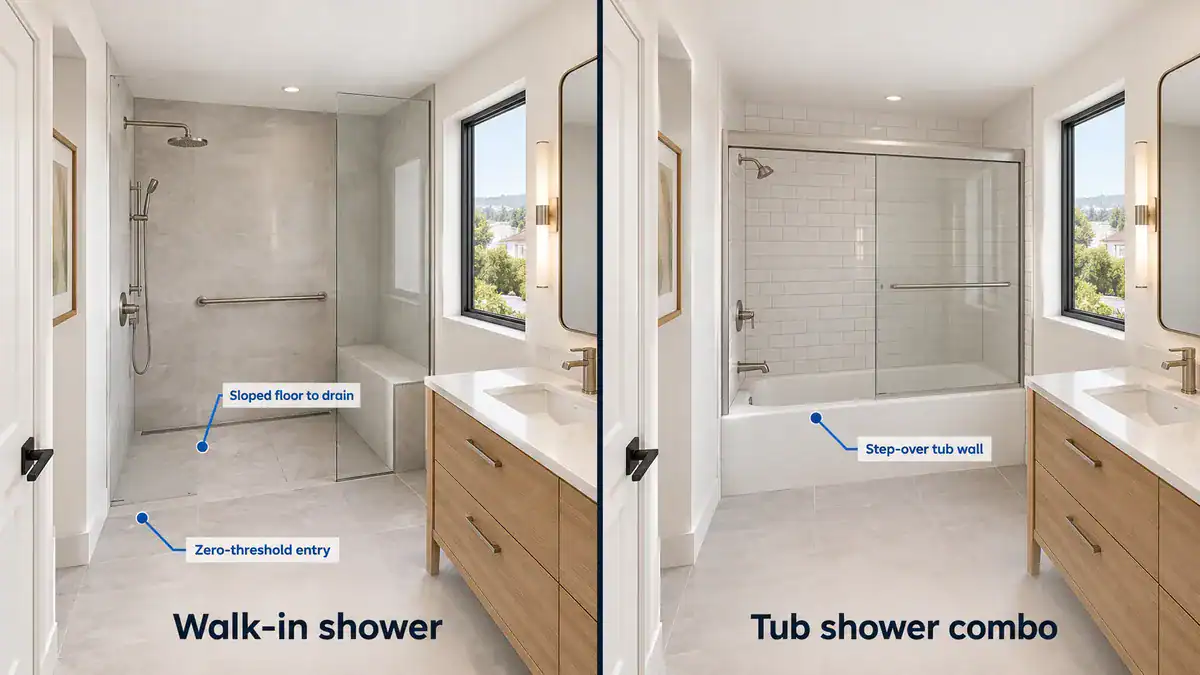
When homeowners compare showers vs bathtubs during a bathroom remodel, the decision often comes down to daily use patterns as much as resale value. A household that showers every day but rarely bathes may still hesitate before removing the only tub, out of habit or a sense that a bath or shower combination feels safer to keep for future buyers. Bathroom floors also play a role in this decision, since a curbless shower typically requires a sloped floor built for drainage, while a bathtub sits on a standard flat floor.
Pros and cons of a walk-in shower
Knowing both sides of a walk-in shower helps you weigh whether it’s the right fit for your specific bathroom.
Benefits of walk-in showers
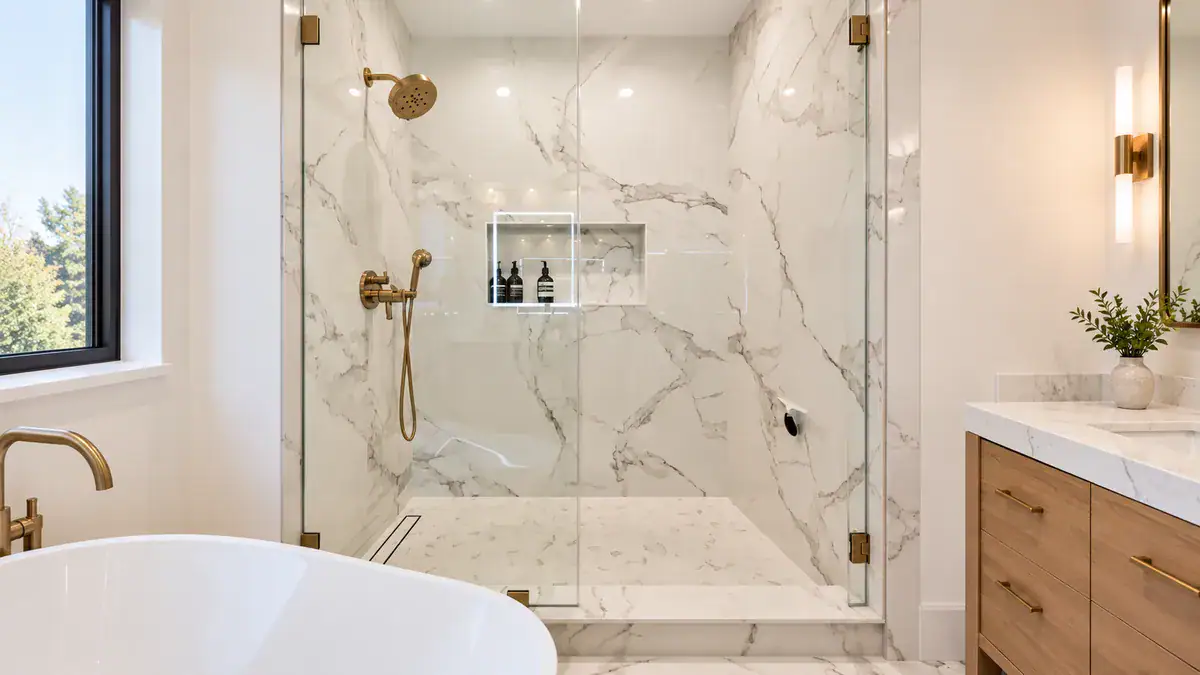
The benefits of walk-in showers include easier entry and exit, a more spacious visual feel even in a smaller footprint, and generally lower water use per use than filling a full bathtub. Curbless designs also support long-term mobility needs, so this option is increasingly popular among homeowners planning to age in place.
Drawbacks to consider
Drawbacks include the loss of bathing as an option in that specific bathroom. In homes with only one bathroom, removing the only tub can sometimes affect resale appeal to buyers with young children who prefer having at least one tub available.
Pros and cons of a traditional bathtub
A traditional bathtub still has advantages, particularly in certain household situations.
Shower pros of a tub shower combo
A tub shower combo offers the traditional shower experience alongside the option to bathe. That gives households flexibility without dedicating separate space to two fixtures. The combination remains a practical, space-efficient choice for many secondary bathrooms.
Cons of keeping a standard tub
A standard tub, or a tub shower combo, can feel less modern and less accessible than a walk-in shower, and stepping over a tub wall can become a mobility challenge for some household members over time.
Resale value: what buyers want
Resale value considerations often shape this decision as much as personal preference.
Keep at least one bathtub somewhere in a home with multiple bathrooms, even if the primary bathroom gets a walk-in shower, since some buyers look for a tub. In a home with just one bathroom, removing the only tub can affect resale value for buyers with young children who still need a bath, not just a shower, for daily routines.
Space and bathroom layout considerations
Space is a major factor in this decision, particularly in compact bathrooms common throughout much of the Bay Area.
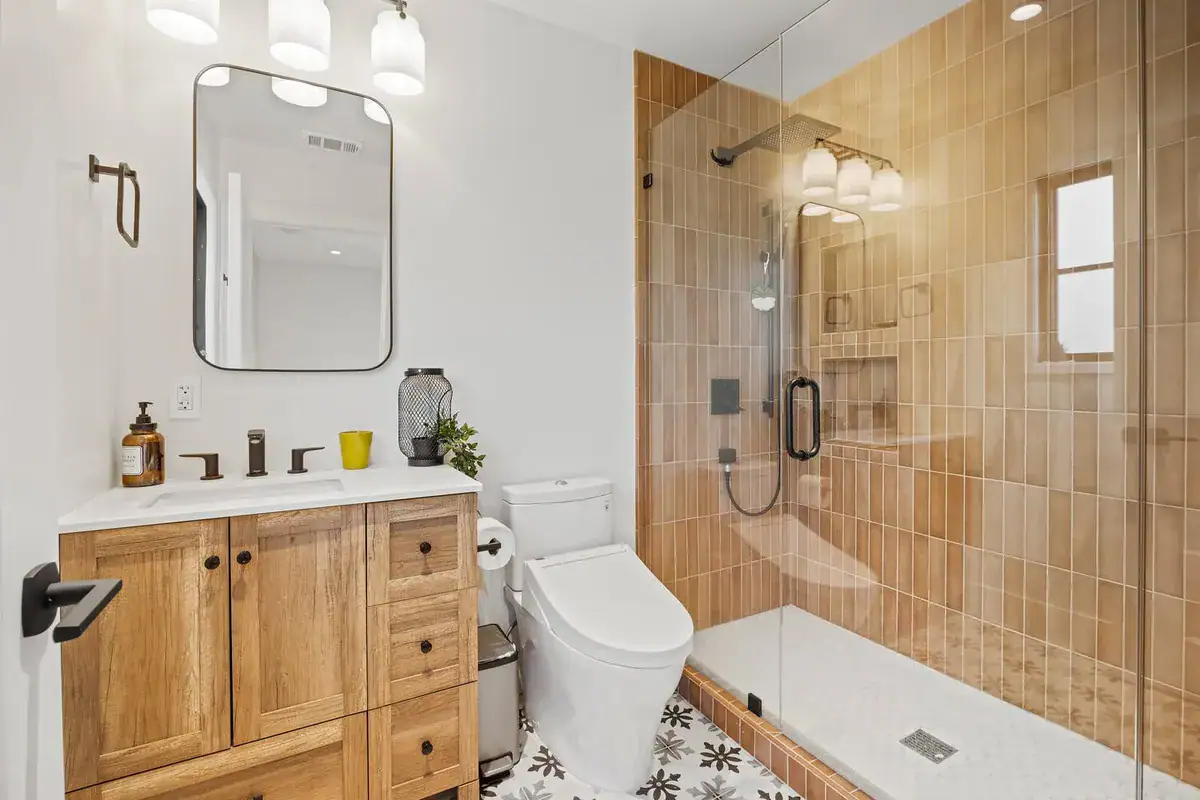
A walk-in shower can make a small bathroom feel more open, while a bathtub or tub shower combo requires a consistent footprint regardless of the room’s actual size. Bathroom layout decisions should account for how the fixture affects traffic flow, water splash zones, and storage throughout the rest of the space.
Mobility and accessibility considerations
Mobility considerations increasingly influence this decision, especially for homeowners planning to stay in their current home long-term.
A curbless walk-in shower with shower benches and grab bars supports mobility challenges far better than a traditional tub, where stepping over a tub wall becomes progressively more difficult with age or injury.
Shower installation and shower replacement costs
Shower installation and shower replacement costs vary depending on whether you’re converting an existing tub space or building a new shower from scratch. The scope includes the shower floor, shower drain, and tile work. Shower cost also depends heavily on finish level, from a basic conversion to a fully custom design.
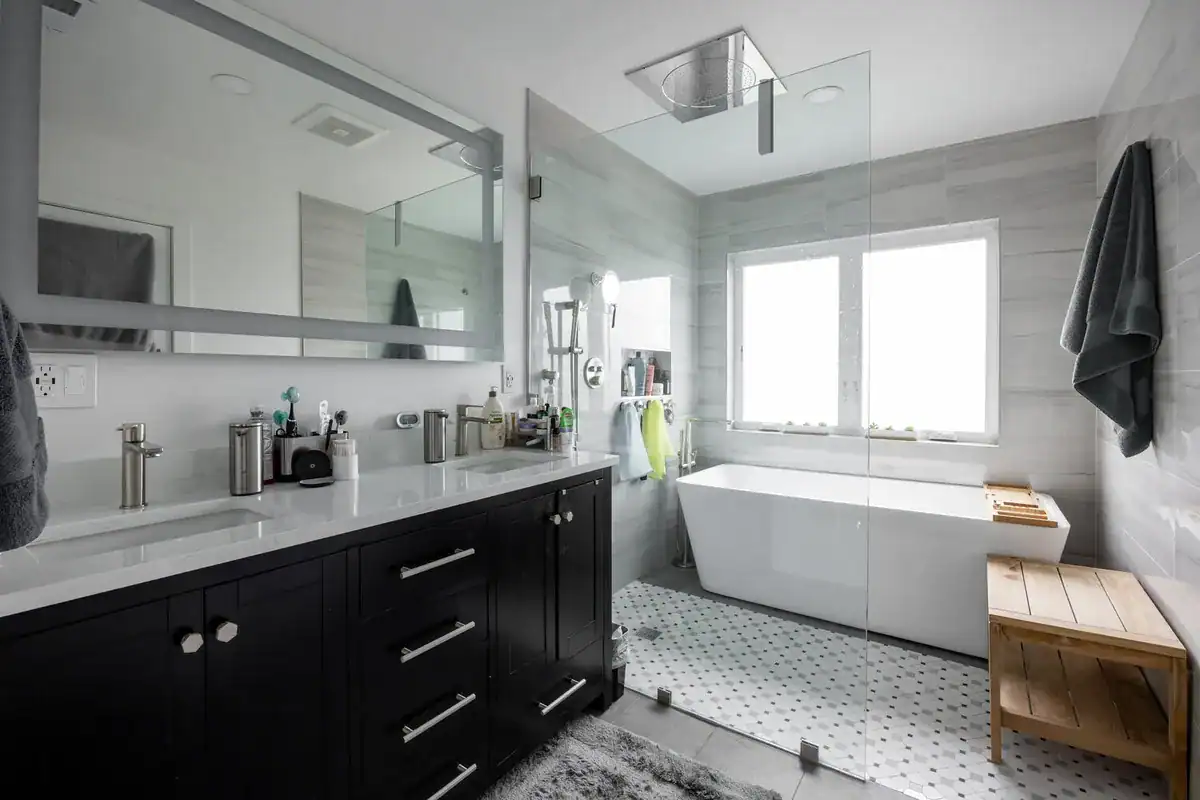
A few additional considerations are worth factoring into any bath or shower decision. Some homeowners value the hydrotherapy benefits of a soaking tub after a long day, which a shower can’t replicate regardless of water pressure or fixture quality. Proper ventilation also matters more than it first appears, since a walk-in shower without a separate shower door or curtain can send more humid air into the room than an enclosed bathtub setup. That makes fan capacity an important part of any bathroom upgrades plan.
Tub shower combo: a middle ground option
A tub shower combo offers a practical middle ground for households that want both options without dedicating separate space to each.
This remains one of the most common configurations in secondary bathrooms across Bay Area homes. It balances resale considerations against the appeal of a modern, spacious walk-in shower elsewhere in the house. Families who still bathe young children often keep at least one tub shower combo for exactly this reason.
What about multiple bathrooms?
In a home with multiple bathrooms, homeowners often choose a walk-in shower for the primary bathroom while keeping a bathtub or tub shower combo in a secondary bathroom.
This approach balances personal preference in daily-use spaces against resale considerations tied to at least one tub remaining somewhere in the home.
Lifestyle and needs and preferences
Lifestyle plays a large role in this decision. Households with young children often value having at least one tub for bath time, while households without children, or those prioritizing convenience and quick daily use, frequently lean toward a walk-in shower.
Needs and preferences shift over time, which is worth considering alongside your current household situation. A household that loves a long bath today may still prefer a quick shower years from now, and water use habits often change as children grow older and daily routines shift toward efficiency over the leisurely bath homeowners enjoyed when they were younger.
Key takeaways
- Walk-in showers have become the more popular choice for primary bathrooms. They offer easier access and a more modern bathroom layout.
- A bathtub or tub shower combo still makes sense for households with young children or homes where resale value depends on keeping at least one tub.
- Mobility and accessibility considerations increasingly favor curbless walk-in showers, especially for homeowners planning to age in place.
- In a home with multiple bathrooms, homeowners often choose a walk-in shower for the primary space while keeping a tub elsewhere.
- The right choice depends on your household’s specific needs and preferences.
Making the right choice for your Bay Area bathroom
Whether a walk-in shower or a bathtub makes more sense for your bathroom depends on your household, your resale considerations, and how you use the space day to day.
Talk to a local bathroom renovation professional to weigh these options against your specific bathroom layout and long-term plans.