Why Homeowners Think They Need Plans First
Many people assume they need detailed plans before reaching out to a contractor because they want to feel prepared.
You may be wondering:
- Should I hire architects before calling anyone else?
- Will a contractor take me seriously without drawings?
- Am I wasting time if I only have ideas?
- What should I know before my first meeting?
These concerns are completely understandable.
A renovation project can feel overwhelming in the beginning, especially in the Bay Area where permitting, construction costs, and older homes can make the process more complex.
The good news is this: you do not need to have every detail figured out before contacting a general contractor.
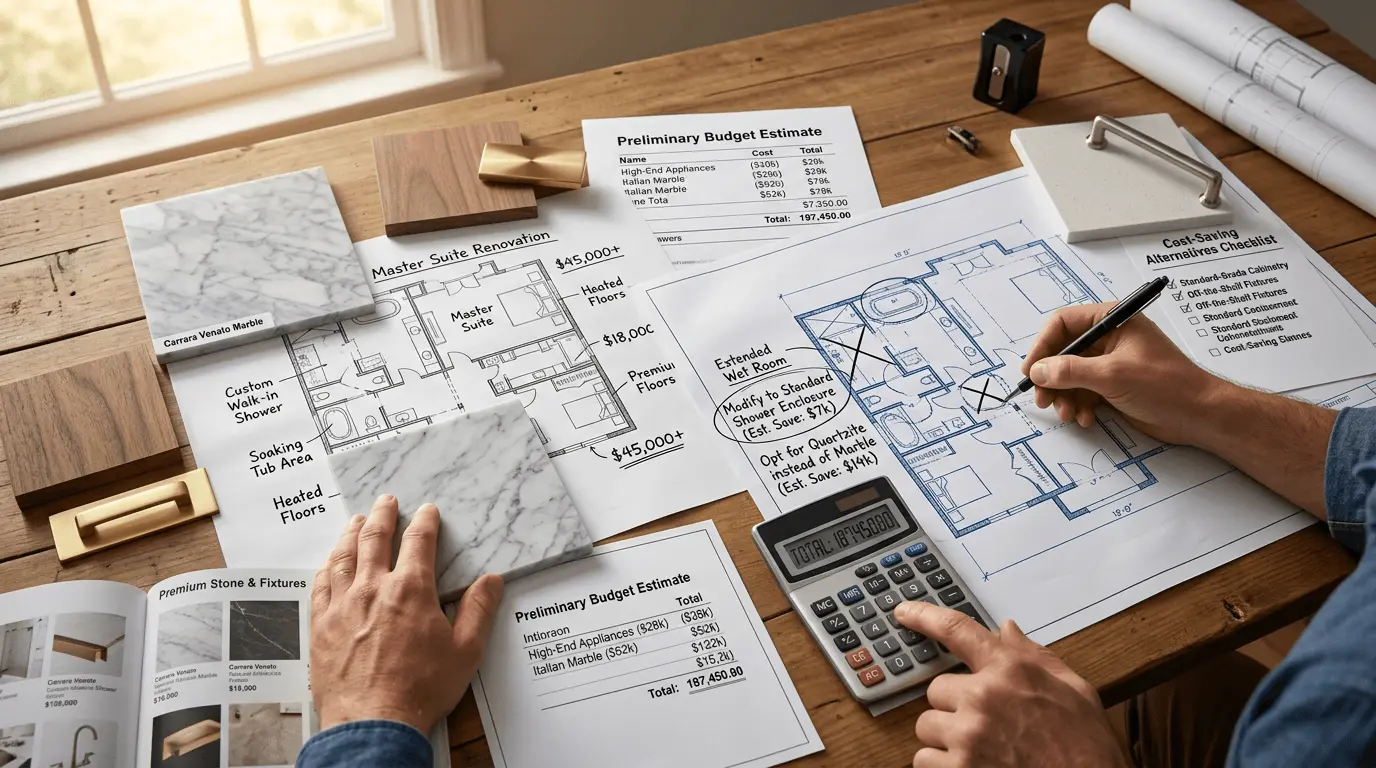
What Happens When You Create Plans Before Hiring a Contractor?
There’s nothing wrong with starting with a designer or architect. In some cases, it makes sense.
However, creating plans before involving a contractor can sometimes create challenges during the design and construction process.
Plans May Not Match Your Budget
One of the most common issues homeowners face is discovering that the original design exceeds their budget.
Without contractor input during the early planning stages, drawings may include materials, layouts, or structural changes that significantly increase costs.
Later revisions can delay the project and create frustration for the owner.
Some Ideas May Not Be Feasible
Certain homes have structural limitations, zoning restrictions, or permitting requirements that affect what can realistically be built.
An experienced contractor or builder can identify these issues early before too much time and money are invested into finalized plans.
Revisions Can Add Time and Cost
If a contractor reviews completed drawings and discovers conflicts with site conditions, code requirements, or construction logistics, revisions may be necessary.
That often means additional work, additional meetings, and additional expenses.
Why It Often Makes Sense to Talk to a Contractor First
A professional contractor can help guide the early stages of your home renovation before formal plans are created.
During the first meeting, you can discuss:
- Your goals for the home
- Your ideal timeline
- Your renovation budget
- Whether structural changes are realistic
- Which permits may be required
- Whether you need architects or engineering support
- The best next steps for the process
This early collaboration helps align the design, construction scope, and budget from the beginning.
Instead of guessing, you’re making decisions based on real-world experience.
That clarity is valuable whether you’re planning a bathroom renovation, kitchen remodel, or larger custom addition.
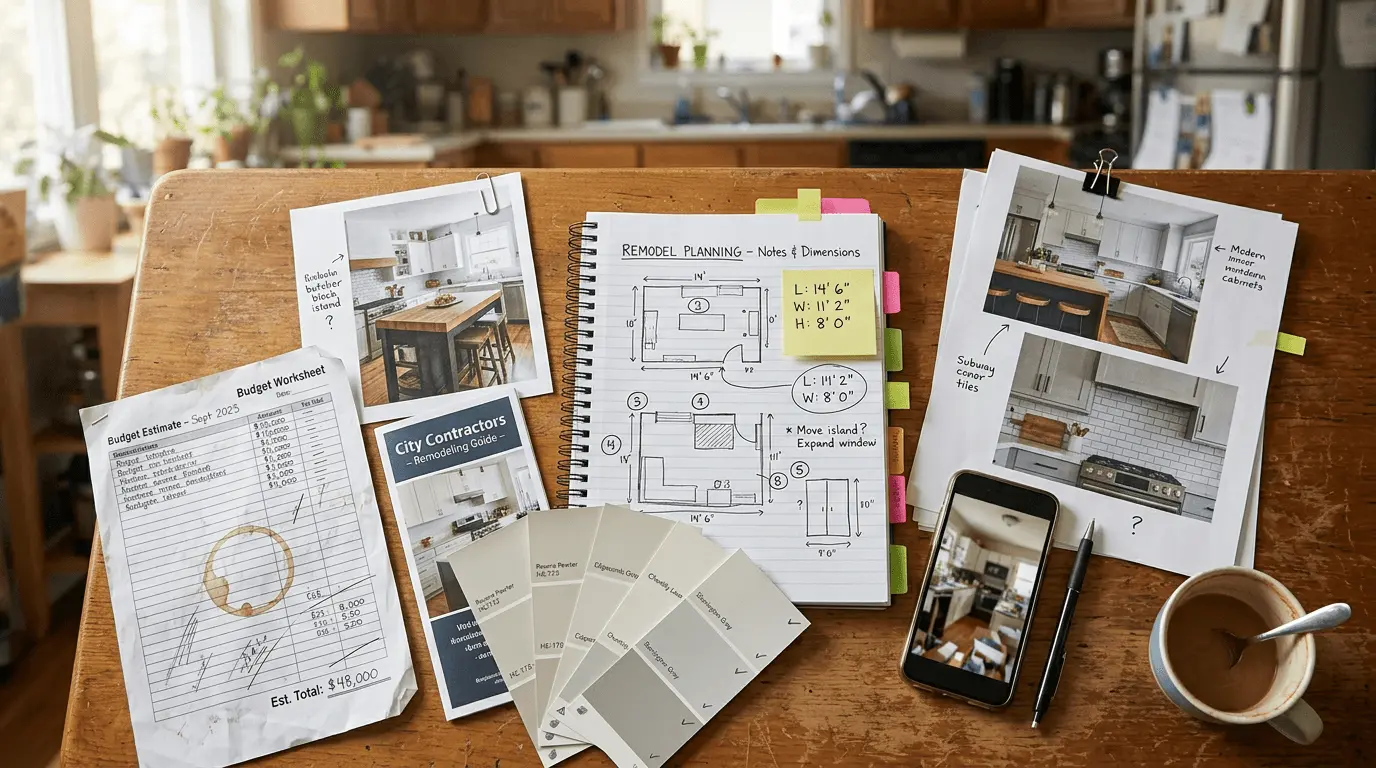
What a Contractor Actually Needs During the First Meeting
You don’t need polished drawings or finalized selections before contacting a general contractor.
Most experienced professionals simply need enough information to understand your goals.
Helpful items to bring to the meeting may include:
- Photos of your current space
- Inspiration images
- A rough list of priorities
- Your target budget range
- Questions about the process
- Any known concerns with the house
That’s enough to start a productive conversation.
At this stage, the focus is usually on feasibility, expectations, and planning.
When Do You Actually Need Plans?
Most major renovation and remodel projects eventually require plans.
Plans are commonly needed for:
But those plans are typically developed after the initial consultation and planning phase.
A good contractor helps determine what level of documentation is necessary before the design process moves forward.
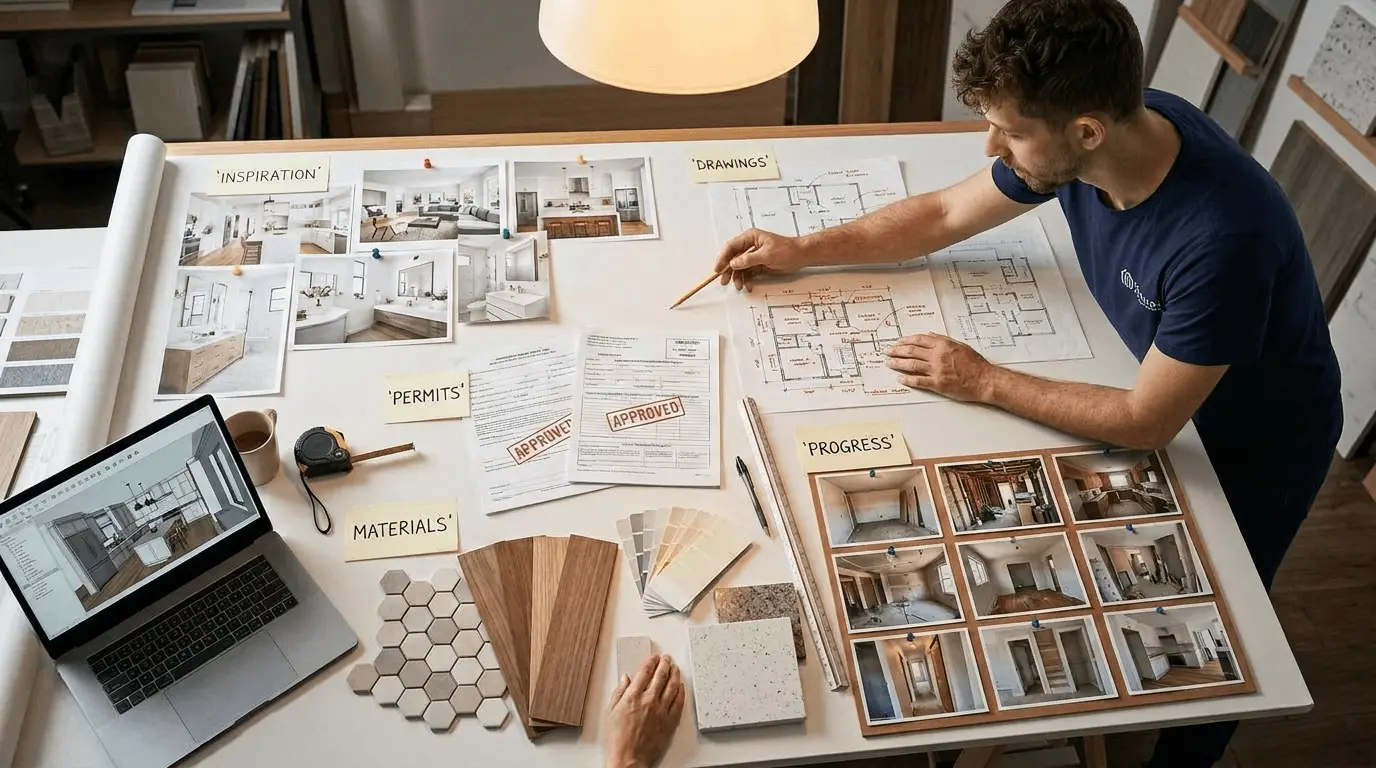
Understanding the Typical Home Renovation Process
Many homeowners feel more confident once they understand the normal order of steps in a remodeling project.
Here’s what the process often looks like:
1. Initial Consultation
The first step is discussing your goals, concerns, ideas, and overall vision for the home.
2. Feasibility and Budget Planning
The contractor evaluates the property, discusses realistic costs, and helps identify practical options.
3. Design Process
Once the scope is better defined, the design process begins.
This may include layouts, selections, drawings, engineering, and material planning.
4. Permits and Approvals
Plans are submitted to the city for approval before construction begins.
5. Construction Phase
After approvals are complete, the work officially begins.
Throughout the process, communication matters. Here’s what’s happening at every phase should always be clear to the homeowner.
What Is Design-Build Remodeling?
Many homeowners today choose a design-build approach because it simplifies communication and improves coordination.
A design-build contractor manages both the design and construction sides of the project under one roof.
Instead of hiring separate professionals, one integrated team handles:
- Planning
- Design
- Permits
- Construction
- Project management
This approach often reduces delays, improves budgeting accuracy, and creates a smoother experience for the homeowner.
Mission Home Remodeling operates as a design-build remodeling company in San Francisco, helping homeowners navigate every stage of the renovation process with one dedicated team.
Why Budget Conversations Matter Early
One of the biggest reasons to involve a contractor early is budgeting.
Construction pricing in the Bay Area can vary significantly depending on:
- Materials
- Structural complexity
- Permit requirements
- Labor availability
- Existing conditions inside the house
Talking openly about the budget during the early planning process helps prevent unrealistic expectations.
It also helps prioritize where your investment creates the most value.
For example, some homeowners may choose to invest more heavily in a kitchen while simplifying finishes in a bathroom.
Others may focus on long-term improvements like energy efficiency or upgrades.
Every home renovation project is different.
Renovation Trends Influencing Bay Area Homeowners
Across San Francisco and surrounding Bay Area communities, homeowners are increasingly investing in:
- Smart home technology
- Sustainable materials
- Open-concept living spaces
- Aging-in-place upgrades
- Indoor-outdoor living areas
- Energy-efficient systems
Older homes throughout the region often require updates to plumbing, electrical systems, and layouts to better support modern living.
These trends are shaping how professionals approach renovation planning and construction today.
How to Prepare Before Contacting a Contractor
If you’re getting ready to start, you don’t need a perfect plan.
You simply need a starting point.
Here are a few practical tips before your first consultation:
Clarify Your Goals
Think about what is and isn’t working in your home today.
Gather Inspiration
Save photos of styles, layouts, or finishes you like.
Establish a Comfortable Budget Range
You don’t need exact numbers, but having a realistic range helps guide recommendations.
Make a List of Questions
Write down concerns about timing, permits, materials, or the process itself.
Be Open to Professional Feedback
Experienced professionals can often suggest better options you may not have considered.
Choosing the Right Contractor for Your Home
Finding the right contractor is about more than pricing.
A good home remodeler should provide:
- Clear communication
- Transparent expectations
- Organized project management
- Realistic timelines
- Quality craftsmanship
- A detailed contract
- Respect for your home and daily life
The relationship matters because remodeling involves ongoing collaboration.
You should feel comfortable asking questions throughout the process.
Final Thoughts: Start With a Conversation
If you’ve been delaying your renovation because you thought you needed completed plans first, you’re not alone.
Most homeowners begin with ideas, inspiration, and questions — not finalized drawings.
Speaking with a contractor early can help you:
- Understand realistic options
- Align your budget with your goals
- Avoid unnecessary revisions
- Clarify the process
- Build a stronger plan from the beginning
Whether you’re planning a bathroom remodel, kitchen upgrade, custom addition, or full home renovation in San Francisco or Houston, the best first step is often the simplest one.
Start with a conversation.
From there, the right team can guide you through design, permits, planning, and construction with clarity and care.
Your dream home does not begin with perfect plans.
It begins with the right people helping you move forward confidently.