What Does an Architect Do in a Remodeling Project?
An architect focuses on the design and planning of a building project. Their role is to translate your ideas for your home into technical plans, detailed drawings, and workable blueprints.
For many homeowners, an architect helps shape the entire design of a renovation before construction begins.
Architect responsibilities often include:
- Creating home design concepts
- Developing permit-ready plans
- Coordinating with a structural engineer
- Ensuring compliance with local building codes
- Providing architectural services during construction
Because Bay Area building regulations are detailed, many building projects rely on an expert architect to ensure the design meets city requirements.
Do I Need an Architect for a Home Remodel?
The short answer: sometimes.
Whether you need an architect depends largely on the scope of your remodel.
For small updates—like replacing finishes or updating plumbing fixtures—a contractor may handle the work without formal architectural services.
However, larger renovation projects often benefit from an architect.
Examples include:
- Structural changes such as removing walls
- Major additions to a house
- A custom home or large-scale home build
- Complex design choices
- Projects requiring extensive engineering
In these cases, an architect helps coordinate the design, ensure code compliance, and produce the drawings needed for approvals.
Why Architects Matter in the San Francisco Bay Area
Homes in San Francisco and Marin County often have unique conditions that influence construction.
Many properties include:
- Steep hillsides
- Historic building requirements
- Tight lot spacing
- Seismic safety considerations
Because of these conditions, a professional architect may work closely with a structural engineer and general contractor to make sure the project is safe and buildable.
An experienced architect understands how local planning departments review plans, which can make obtaining a building permit much smoother.
Architect vs Contractor: What’s the Difference?
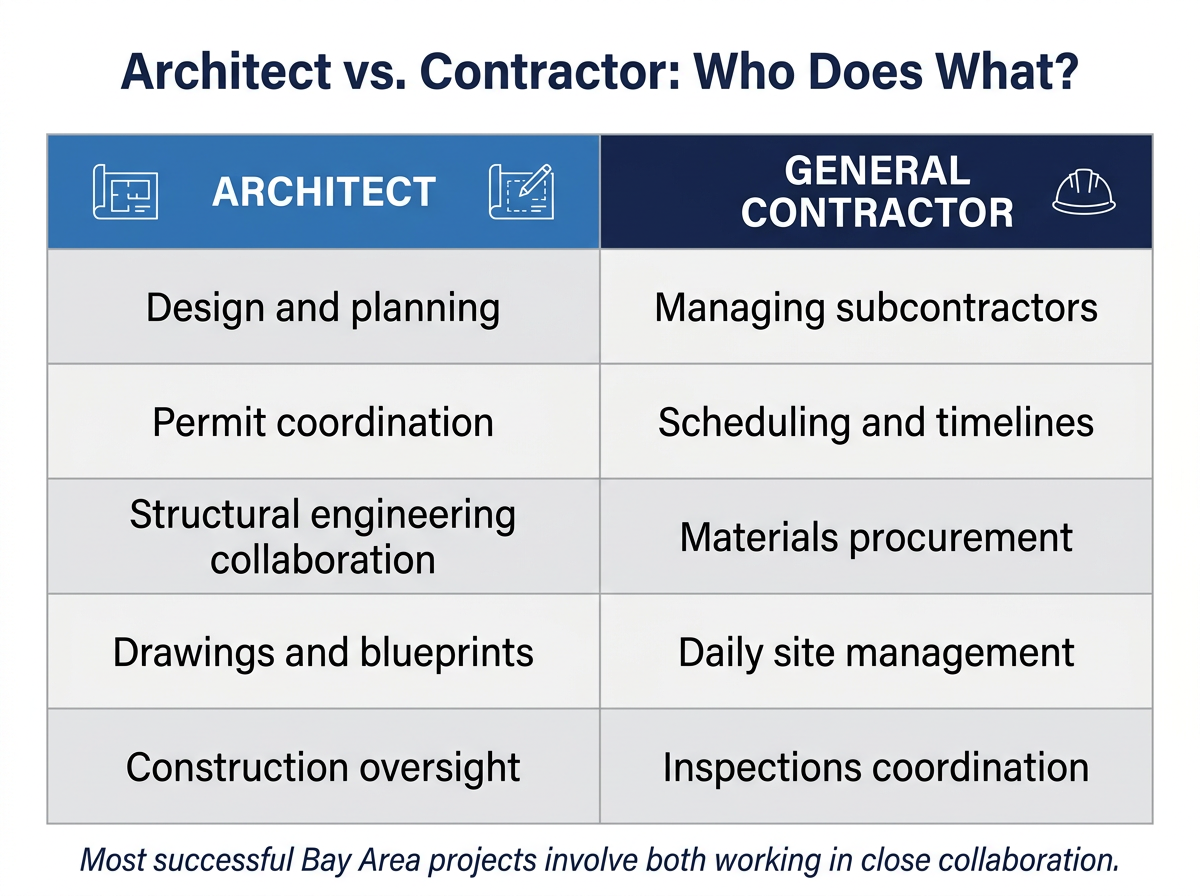
A contractor manages the physical construction of your home.
A general contractor typically oversees:
- Hiring subcontractors
- Scheduling construction
- Managing materials
- Coordinating inspections
- Completing the building work
An architect, by contrast, focuses primarily on design, plans, and overall project vision.
Most successful building projects involve both.
The architect develops the design, and the contractor brings that vision to life during construction.
Design-Build vs Hiring an Architect Separately
When you hire an architect and a contractor separately, you’re responsible for managing communication between both parties. This can sometimes lead to delays, budget misalignment, or gaps between design and execution.
With a design-build approach, everything is integrated—meaning the design is developed with construction in mind from day one.
| Option | Who Handles Design | Who Manages Construction | Coordination |
| Architect + Contractor | Separate | Separate | You manage |
| Design-Build Contractor | One team | One team | Fully integrated |
Do I Need Plans Before Contacting a Contractor?
Many homeowners assume they need fully developed architectural plans before reaching out to a contractor.
Here’s what’s happening: that’s not always necessary.
For many remodeling projects, homeowners start by speaking with a contractor to evaluate feasibility, budget, and overall scope before investing in full architectural drawings.
A contractor can often help determine:
- Whether an architect is required
- What level of design work makes sense for your project
- Whether structural engineering will be necessary
- What the permit requirements may look like
Starting the conversation early helps you avoid investing time and money into plans that may not align with real construction conditions or budget expectations.
Typical Order of Steps in a Remodeling Project
If you’re trying to understand where to begin, you’re not alone. This is one of the most common questions homeowners ask.
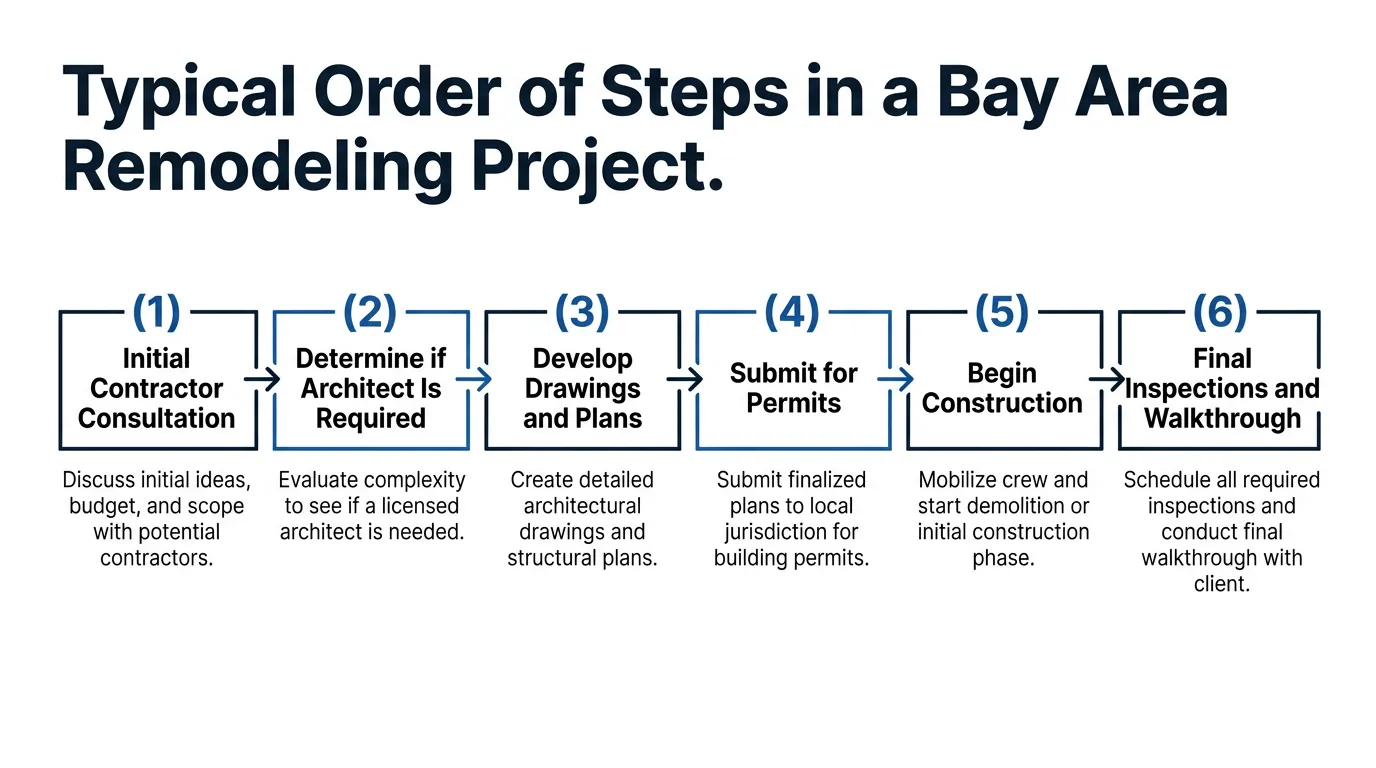
For most Bay Area remodeling projects, the process typically looks like this:
- Initial conversation with a contractor to evaluate goals, feasibility, and budget
- Determining whether architectural design is needed
- Developing drawings and plans
- Submitting plans for permits
- Beginning construction
Understanding this sequence helps prevent delays and ensures your design aligns with how the project will actually be built.
Permits in San Francisco and Marin County
Permits are a key part of remodeling in the Bay Area—and they often influence whether architectural plans are required.
In many cases, architectural drawings are needed for permit approval. However, the level of documentation depends on the scope of your project.
For example:
- Minor interior renovations may only require basic drawings
- Structural changes typically require architectural plans and engineering
- Hillside or complex properties often require more detailed design review
Because permitting requirements vary by city and project type, many homeowners begin by speaking with a contractor who understands how local building departments review plans.
That early guidance can make the entire process smoother and more predictable.
When a Draftsperson May Be Enough
Not every renovation requires a full architect.
For smaller home renovation or remodeling projects, a draftsperson may be able to create the plans needed for permits.
A draftsperson typically produces technical drawings based on an existing concept rather than designing the space from scratch.
Many homeowners use a draftsperson when:
- The design is straightforward
- Structural changes are minimal
- The contractor already understands the construction approach
However, a draftsperson generally does not provide the broader design strategy or architectural services that a licensed architect offers.
When a Design-Build Contractor Makes More Sense
In many remodeling projects, especially in San Francisco, homeowners don’t necessarily need to hire an architect separately. A design-build contractor brings both design and construction together under one team, which can simplify the entire process.
Instead of coordinating between an architect, engineers, and a contractor, a design-build firm manages everything—from initial planning and layout to permitting and construction—under one roof.
If you’re looking for a more streamlined approach, working with a design-build contractor in San Francisco can help reduce delays, improve communication, and keep your project aligned from concept through construction.
What Architectural Services Typically Include
Architectural services vary depending on the project, but they typically cover several stages.
These may include:
Initial Design Consultation
An architect meets with homeowners to understand goals, budget, and ideas for the home.
Concept Design
Early plans are created to explore layout options and design choices.
Construction Drawings
Detailed blueprints and drawings are developed for permits and construction.
Permit Coordination
The architect may help submit plans for review and address city requirements.
Construction Support
During construction, the architect may review progress to ensure the design is followed.
Architect Cost in the Bay Area
One common question homeowners ask is about architect cost.
The cost of hiring an architect in the San Francisco Bay Area depends on the size and complexity of the project.
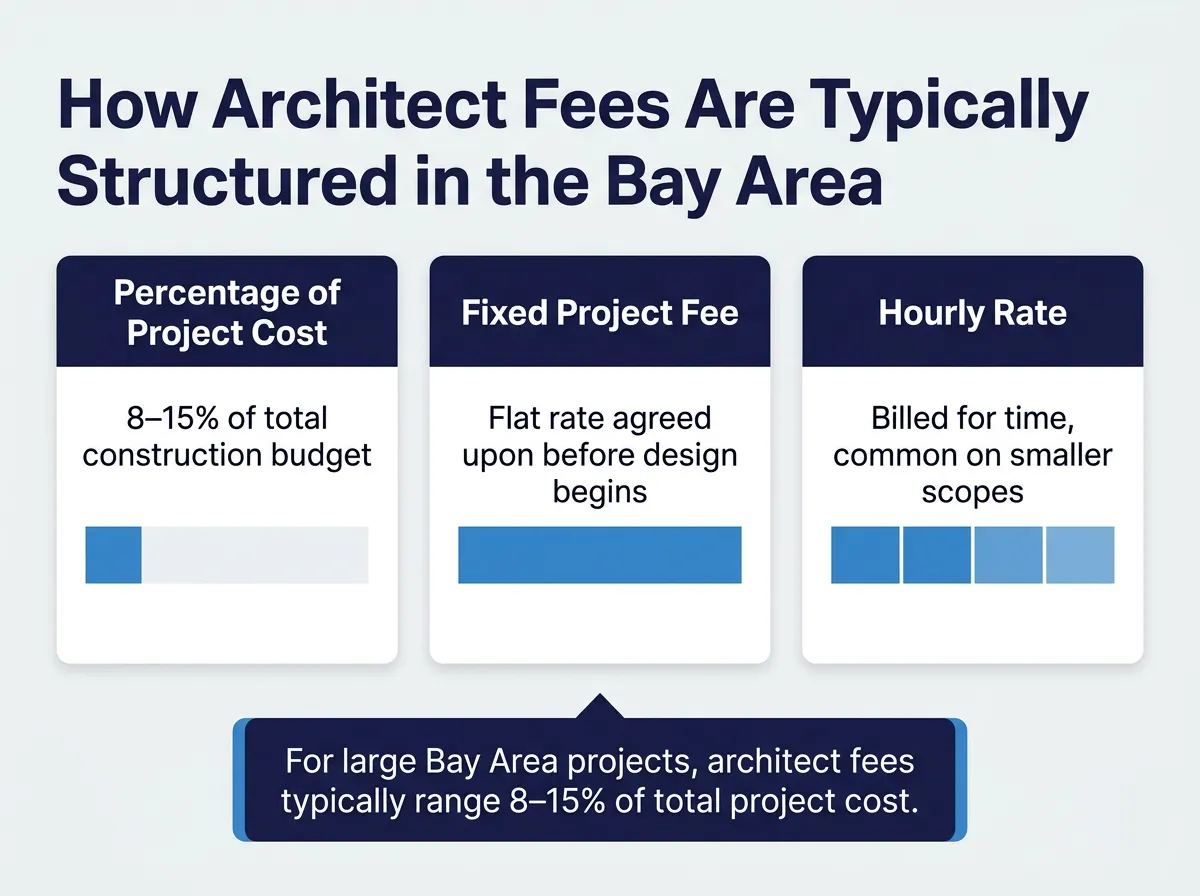
Many architect fees are structured in one of three ways:
- A percentage of the total construction cost
- A fixed fee for the design work
- An hourly rate
For large building projects, architect fees often range from 8–15% of the project cost.
While that may seem significant, thoughtful design can prevent expensive mistakes and protect your budget over the long term.
How Architects Help Control Project Cost
A skilled architect does more than create attractive designs.
They also help manage cost.
Early planning helps homeowners understand how design choices influence project cost.
For example, an architect may recommend structural solutions that simplify construction, saving both money and time.
They can also ensure plans align with your budget, preventing major changes later in the construction process.
The Role of the Contractor During Construction
Once the design and plans are complete, the contractor leads the construction phase.
Your general contractor manages the day-to-day building work.
Responsibilities typically include:
- Coordinating subcontractors
- Scheduling inspections
- Ordering materials
- Managing timelines
- Ensuring quality workmanship
A good contractor works closely with the architect so the project follows the approved plans.
Why Collaboration Matters
The best outcomes often come from collaboration between the architect, builder, and contractor.
This teamwork helps ensure the design is practical and the construction process stays efficient.
When everyone works together early in the project, homeowners avoid common issues such as:
- Unrealistic design ideas
- Budget overruns
- Permit delays
- Construction conflicts
Understanding the Construction Process
A typical construction process for a Bay Area renovation includes several stages.
- Planning and design
- Creating permit-ready plans
- Submitting for a building permit
- Beginning construction
- Completing inspections
- Final walkthrough and finishing work
Each stage requires careful coordination between the architect, contractor, and other professionals involved in the construction project.
When an Architect Is Essential
Some building situations almost always require an architect.
Examples include:
- Large additions to a house
- Major structural building changes
- Hillside construction
- A custom home
- Complex home design
These projects often require coordination with a structural engineer and additional engineering review.
When You May Not Need an Architect
There are also many situations where an architect may not be necessary.
These include:
- Minor renovation projects
- Interior layout updates without structural changes
- Simple building upgrades
- Cosmetic remodeling
In these cases, a qualified contractor and a draftsperson may be enough to develop the required plans.
How Bay Area Building Codes Influence Design
Local building codes in the Bay Area are detailed and frequently updated.
These rules affect how homes are designed and built.
They may influence:
- Structural safety
- Energy efficiency
- Seismic resilience
- Accessibility standards
An experienced architect or contractor can help ensure the design meets all local building requirements.
Budget Planning for a Renovation Project
Planning a budget early in the project is one of the most important steps.
Homeowners should account for:
- Design and architect fees
- Permit costs
- Materials
- Labor
- Unexpected construction adjustments
Clear planning helps homeowners avoid surprises and ensures the project cost stays manageable.
Choosing the Right Team for Your Project
Whether you work with an architect, a builder, or a general contractor, the most important factor is experience.
Look for professionals who understand:
- Bay Area construction
- Local permit requirements
- Residential building challenges
- Collaboration across design and construction
The right team helps guide homeowners through each step of the project.
Final Thoughts: Do I Need an Architect?
So, do I need an architect for your Bay Area remodeling project?
For simple home updates, you may not. A qualified contractor and draftsperson can often provide the plans needed to move forward.
But for larger renovation, structural changes, or complex design work, hiring an architect can make a significant difference.The right architect helps turn ideas into workable plans, ensures the building meets local codes, and helps guide the construction toward a successful outcome.
If you’re planning a remodel in the San Francisco Bay Area and want a more streamlined experience, working with a design-build team can simplify both the design and construction phases.
Learn more about how our design-build remodeling services in San Francisco help homeowners move from concept to completion with one cohesive team.