Why This Decision Matters for Your Home Remodel
Every remodel starts with a vision—but how that vision turns into reality depends on your team structure.
In high-cost markets like San Francisco, where construction costs and permitting complexity are higher than average, your choice directly affects your cost, communication, and stress level
What Is a General Contractor?
A general contractor is responsible for managing the construction phase of your project.
They typically step in after your design plans and architectural plans are already completed.
What General Contractor Services Include
- Hiring and coordinating construction teams
- Managing schedules and materials
- Executing the build construction
- Overseeing subcontractors and builders
This general contractor model separates design and construction, meaning you’ll often work with multiple parties.
What Is a Design Build Firm?
A design build firm handles both design and construction under one roof.
Instead of hiring an independent architect and then a separate contractor, you work with one integrated firm from start to finish.
How the Design Build Model Works
- One team manages architectural design, planning, and construction
- Designers and builders collaborate from day one
- The same build firm is accountable for the entire project
This build model simplifies communication and creates a more unified process.
Design-Build vs. General Contractor: Key Difference
The core difference comes down to how your project is structured.
- The general contractor model separates design and execution
- A design build approach integrates both into one process
That integration often leads to fewer gaps between ideas and execution.
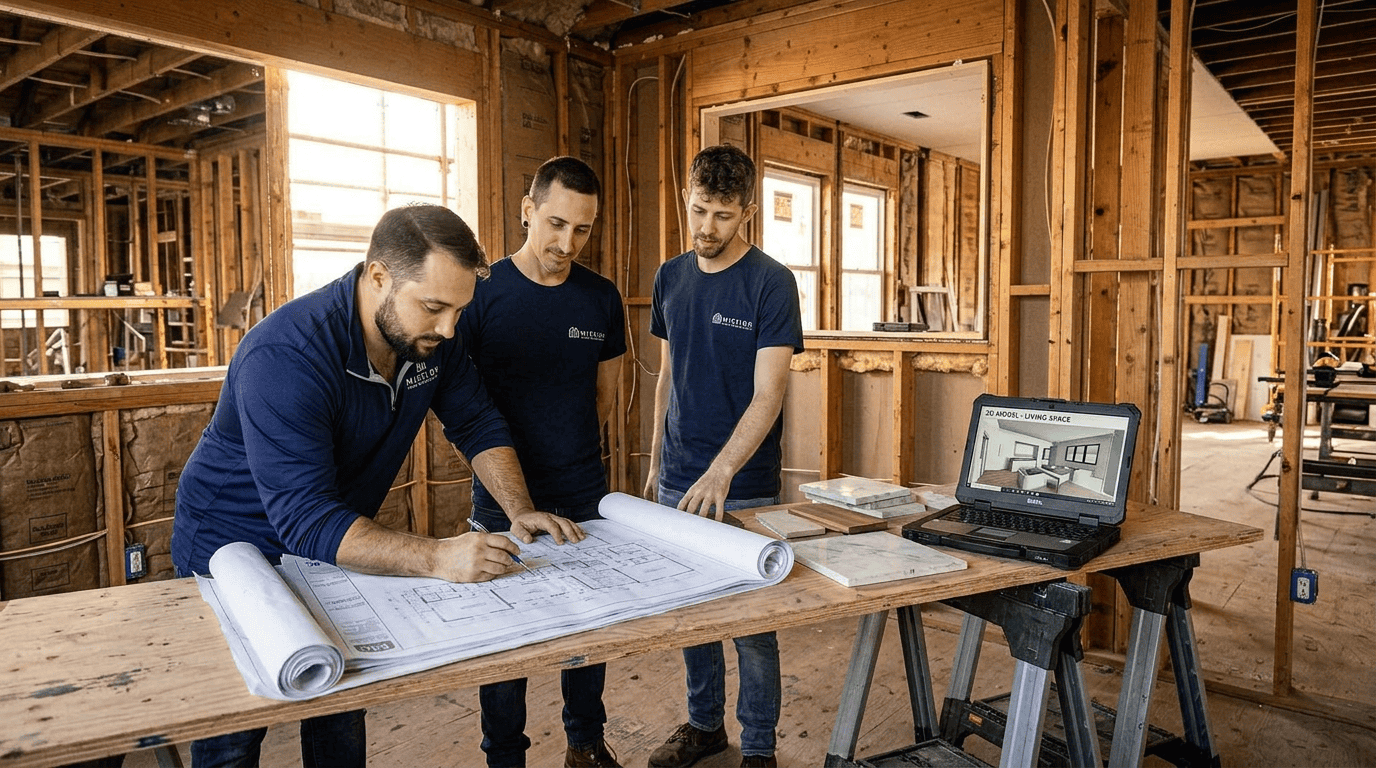
How the Design Phase Differs
General Contractor Approach
You start with an architect or designer, develop plans, and then bring those to a contractor.
This separate design process can lead to disconnects between vision and feasibility.
Design Build Approach
With design build, the design phase includes input from construction teams early on.
That means your design plans are shaped by real-world cost, materials, and feasibility from the beginning.
Communication: One Team vs Multiple Vendors
With a General Contractor
You’ll coordinate between:
- Architect
- Interior design team
- General contractor
- Subcontractors
This can create delays, especially when questions or revisions arise.
With a Design Build Firm
You work with one build firm and one unified team structure.
We take pride in keeping communication clear, so you always know what’s happening next.

Budget Control and Cost Transparency
General Contractor Model and Budget Risks
Because design happens first, your budget may not fully account for real construction costs.
This often leads to:
- Unexpected change orders
- Revisions after bidding
- Higher overall remodeling costs
Design Build and Budget Control
A design build approach supports stronger budget control.
- Costs are estimated during design and construction planning
- Fewer surprises during the build
- Better alignment between vision and cost
Change Orders: Where Projects Can Shift
In a general contractor setup, change orders are more common.
Why?
Because the contractor may uncover issues or conflicts in the plans after work begins.
With a design build firm, collaboration during the design phase helps reduce these changes before construction starts.
Timeline Differences
General Contractor Timeline
- Design completed first
- Bidding process follows
- Construction starts later
This step-by-step structure can extend your overall project timeline.
Design Build Timeline
The design and construction teams overlap their work.
This streamlined build approach often leads to faster delivery.

Project Management and Accountability
General Contractor
Responsibility is split across:
- Architect
- General contractor
- Multiple vendors
If issues arise, it can be unclear who owns the solution.
Design Build Firm
One firm manages everything, including project management.
That single point of accountability reduces confusion and keeps your project moving forward.
Quality and Craftsmanship
Both a skilled general contractor and a strong build firm can deliver high-quality results.
The difference is in consistency.
With design build, the same team oversees design and construction, helping maintain alignment from concept to completion.
Which Option Is Better for a Bay Area Remodel?
In the San Francisco Bay Area and Marin County, projects often involve:
- Older homes needing upgrades
- Strict permitting requirements
- High construction costs
These factors make coordination especially important.
A design build firm can simplify these challenges by managing the full renovation process.
When a General Contractor Might Make Sense
A general contractor may be the right fit if:
- You already have completed architectural design
- You prefer working with an independent architect
- Your project is straightforward and well-defined
When Design Build Is the Better Fit
A design build approach is often ideal if:
- You want one team for design and construction
- You value clear communication and fewer change orders
- You need help shaping your plans from the start
Cost Comparison: Is Design-Build More Expensive?
This is one of the most common questions.
Short Answer
Not necessarily.
What Affects Cost
- Scope of your remodel
- Complexity of design
- Level of finishes
- Site conditions
In many cases, a design build firm helps control total cost by reducing inefficiencies and rework.
What Is the 30% Rule in Remodeling?
In the Bay Area, homeowners often set aside an additional 20–30% of their budget for unexpected costs .
This applies to both:
- General contractor projects
- Design build projects
However, integrated planning can reduce how often those extra funds are needed.
What Is a Disadvantage of Design-Build?
Transparency matters, so here’s the honest answer.
A potential downside of design build is less separation between designers and builders.
Some homeowners prefer independent checks and balances.
That said, a well-structured build firm addresses this through clear processes and internal quality control.
Choosing the Right Path for Your Home Renovation
At the end of the day, the right choice depends on your priorities.
If you want flexibility and already have plans, a general contractor may work.
If you want a streamlined, guided experience with fewer unknowns, a design build approach offers a more cohesive path.
Final Thoughts: Clarity Leads to Better Projects
A successful home renovation isn’t just about the final result—it’s about how the process feels along the way.
Here’s what we recommend: choose a path that gives you clarity, confidence, and a team you can rely on. Because when your design and construction teams are aligned, everything else becomes easier.